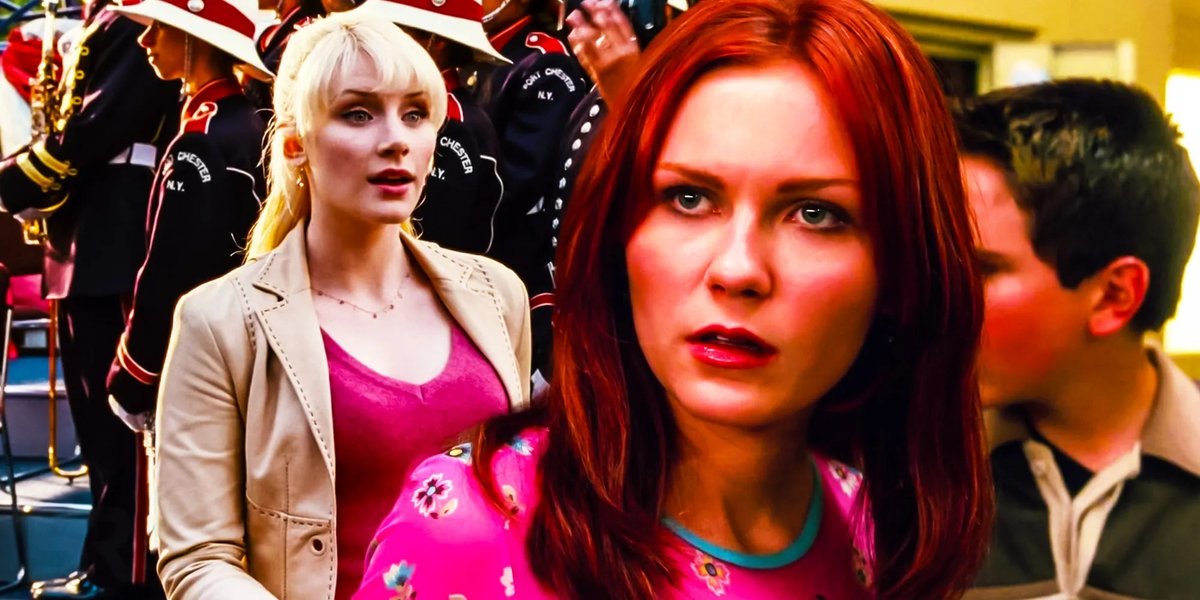
When you think of Sam Raimi's Spider-Man trilogy, vivid images probably come to mind: Tobey Maguire's earnest Peter Parker, the iconic upside-down kiss, and perhaps, the often-debated figure of Mary Jane Watson. For years, the character, brought to life by Kirsten Dunst, has been a lightning rod for criticism and conversation, her role frequently reduced to a damsel in distress or a mere plot device. Yet, to dismiss her entirely would be to overlook a crucial, if complicated, chapter in superhero cinema. The Legacy and Cultural Impact of Kirsten Dunst's Mary Jane is far more nuanced than a simple critique suggests, embodying the genre's early struggles with female representation while also hinting at the potential for something more.
Dunst's Mary Jane stands as a fascinating case study in how a performer can imbue a character with depth, even when the script doesn't always deliver. She was central to Peter Parker's narrative, introduced in the very first film as the "story about a girl," yet her own agency often felt secondary to the male relationships around her. This article reexamines her portrayal, explores the challenges she faced, and considers how, despite her narrative limitations, Dunst's Mary Jane left an indelible mark on both the Spider-Man mythos and the broader landscape of superhero films.
At a Glance: Unpacking Kirsten Dunst's Mary Jane
- A Contradictory Core: Mary Jane was positioned as Peter Parker's ultimate love interest and narrative anchor, yet frequently served as a plot device rather than a fully realized character.
- The "Girl Next Door" Trap: Initially embodying the stereotypical relatable crush, her character often devolved into a "damsel in distress."
- Kirsten Dunst's Quiet Influence: Actress Kirsten Dunst actively pushed for more agency and integrity in her portrayal, resisting overt sexualization and demanding a more mature character.
- Paving the Way (Subtly): Despite the films' shortcomings in female representation, Dunst's performance laid groundwork for future discussions and expectations of women in superhero narratives.
- A Call for Deeper Stories: Her legacy highlights the ongoing need for nuanced, independent female characters in blockbuster cinema, moving beyond traditional romantic or support roles.
The Perplexing Paradox of Peter's Predetermined Partner
From the moment Peter Parker's voiceover declared, "This is a story about a girl," Mary Jane Watson was established as the emotional core of Raimi's Spider-Man universe. She was the unattainable crush, the light in Peter's often-dark world, and the driving force behind many of his most significant decisions. This positioning, however, created a unique paradox. While about her, the story rarely felt for her.
Initially, Mary Jane was the quintessential "girl next door" archetype – beautiful, popular, and seemingly just out of Peter's reach. This classic trope is effective in setting up a relatable romantic tension, but it often carries an inherent limitation: the character's primary function becomes to be desired and loved by the male protagonist, rather than to forge an independent path. In the first film, her struggles were largely external, revolving around an abusive father and a desire to escape her circumstances, but these were often framed as reasons for Peter to empathize with and eventually save her, rather than as catalysts for her own growth.
The brilliance of Dunst's casting, however, lay in her ability to project a world-weariness and an underlying intelligence that transcended the stereotypical "dream girl" façade. She was a woman with her own nascent aspirations, even if the narrative wasn't always equipped to fully explore them. This created a subtle tension between the character as written and the depth Dunst brought to the screen, a dynamic that would only grow more pronounced as the trilogy progressed.
From Damsel to Device: Mary Jane's Narrative Arc in the Raimi Trilogy
Tracing Mary Jane's journey through the three films reveals a frustrating pattern of missed opportunities and narrative shortcuts, despite the revolutionary impact of Kirsten Dunst's Spider-Man movies on the superhero genre.
In Spider-Man (2002), MJ is introduced as the idealized object of Peter's affection. Her primary role is to be the motivation for Peter's heroics and the prize he eventually wins. While she has moments of agency – like leaving her abusive father or pursuing an acting career – these are often overshadowed by her function as the woman who needs saving, culminating in the iconic bridge scene. Her internal life, beyond her longing for stability and affection, remains largely unexplored.
By Spider-Man 2 (2004), the narrative struggles intensify. Mary Jane is stuck in a classic romantic cliché: the woman waiting for her hero. Her burgeoning acting career and engagement to John Jameson are presented less as her own independent choices and more as obstacles in Peter's path to embracing his destiny. She becomes the emotional anchor for Peter's guilt and sacrifice, repeatedly placed in peril to force his hand. Dunst herself noted the character was "more of a damsel in distress" in this installment, a direct acknowledgment of the narrative's limitations. Her internal conflict about choosing between a secure but passionless relationship and her lingering feelings for Peter is present, but often feels secondary to Peter's existential crisis.
It's in Spider-Man 3 (2007) that the films offer a tantalizing, albeit brief, glimpse of a more relevant Mary Jane. Here, we see her grappling with career struggles, professional jealousy, and a profound sense of imposter syndrome as her Broadway debut falters. She's also confronted with Peter's self-absorption and lack of emotional support, a realistic portrayal of relationship friction. These plot points offered a chance to develop Mary Jane beyond her romantic ties, exploring her as an individual facing very human, relatable problems. However, this promising arc is quickly overshadowed by the complex, often toxic, relationship between Peter and Harry Osborn, the introduction of Gwen Stacy, and the various villain subplots. Mary Jane, despite having genuine internal conflict, ultimately reverts to a reactive role, her emotional struggles frequently used to fuel Peter's own dramatic journey or to create conflict between the male leads. She shifts from the "girl next door" to the "girl in trouble" to, ultimately, a convenient "plot device."
Kirsten Dunst's Quiet Crusade: Redefining Mary Jane from Within
The prevailing narrative often overlooks the quiet yet significant battle Kirsten Dunst fought to give Mary Jane more substance. Dunst, a seasoned actress even then, understood the character's potential and actively pushed back against the reductive tropes often assigned to female characters in early 2000s blockbusters.
Dunst articulated her belief that Mary Jane was a "hero in her own way." She wasn't an invulnerable superhero, but a human being wrestling with deeply personal issues, navigating family trauma, career aspirations, and the complexities of love with a hidden vigilante. Dunst saw Mary Jane as more mature than Peter Parker, shouldering responsibilities and making tough choices while Peter was often still finding his footing. This perspective informed her performance, adding layers of resilience and emotional intelligence that weren't always explicitly written into the script.
Her influence wasn't just in her performance; it was also in her creative input behind the scenes. For Spider-Man 2, Dunst explicitly requested that Mary Jane "not scream as much as in the first part," urging for a portrayal that moved beyond the constant need for rescue. This wasn't a superficial complaint; it was a demand for agency, a desire for her character to be more than just a catalyst for danger.
Perhaps most tellingly, Dunst maintained full control over Mary Jane's wardrobe. She deliberately rejected any costumes that might have made her an "object of sex," preferring clothes that felt authentic to the character and her situation, rather than catering to a male gaze. This decision speaks volumes about her commitment to character integrity over superficial appeal. In an era where female superhero costumes were often designed for maximum titillation, Dunst's stance was quietly revolutionary, setting a subtle precedent for actresses to assert their control over how their characters are presented. Her preference for "human characters" over "invulnerable superheroes or overly sexy costumes" was a consistent theme, highlighting her dedication to authenticity.
Beyond the Scream: Mary Jane as a Proto-Feminist Figure (Unintended or Otherwise)?
Despite the narrative's shortcomings, Kirsten Dunst's Mary Jane can be viewed through a modern lens as a proto-feminist figure, albeit one whose impact was often understated and perhaps even unintended by the broader production. Her struggles, though often a backdrop for Peter's story, were deeply relatable and reflective of real-world challenges faced by young women.
Mary Jane's career aspirations, her battle with imposter syndrome, and her desire for emotional support are universal experiences. While the films often reduced these to plot points, Dunst's performance allowed audiences to glimpse the weight of these struggles. She wasn't just "the girlfriend"; she was a young woman trying to make her way in a competitive industry, navigating dysfunctional family dynamics, and seeking genuine connection in a relationship that was constantly challenged by extraordinary circumstances.
In an era where female characters in superhero films were rare and often one-dimensional, Mary Jane, with all her flaws and frustrations, represented a step, however small, towards more complex portrayals. Her "normalcy" amidst the fantastical world of superheroes made her struggles—and her strength in enduring them—all the more poignant. She embodied the quiet heroism of everyday life, fighting battles not with superpowers, but with resilience, vulnerability, and a longing for something more. This subtly paved the way for audiences to expect and demand more from future female characters in the genre.
The Enduring Echoes: Cultural Reassessment and Modern Lenses
Today, as superhero cinema has evolved to include more diverse and powerful female leads, Kirsten Dunst's Mary Jane is undergoing a quiet cultural reassessment. Her portrayal is no longer just viewed through the narrow scope of the early 2000s but is being re-evaluated in the context of the genre's growth and its ongoing efforts to improve female representation.
Critics and audiences now look back at the Raimi trilogy not just as foundational superhero films, but also as artifacts of their time, reflecting societal attitudes towards women. Mary Jane’s frequent placement in peril, her struggles to find her own voice, and the way her personal arc was often sacrificed for male character development are now seen as glaring examples of the "damsel in distress" trope that modern films actively try to subvert.
However, Dunst’s performance itself often escapes this criticism. Her nuanced acting provided a human touch that prevented Mary Jane from becoming a mere caricature. She brought a specific brand of vulnerability and strength that resonated with many young female viewers, who saw in her a reflection of their own struggles with identity, relationships, and ambition. While the narrative might have faltered, Dunst's inherent charisma and grounded approach ensured Mary Jane was never forgettable.
Comparing Dunst's portrayal to subsequent iterations of Mary Jane or other female love interests in superhero films highlights her unique position. She existed in a pre-MCU landscape, where the rules of female characterization were still largely undeveloped. Her legacy isn't just about what the films did with her, but also what they didn't, inspiring future filmmakers and writers to push for more.
What Could Have Been: Dunst's Vision for Mary Jane's Future
Kirsten Dunst's continued interest in the character of Mary Jane Watson speaks volumes about the unfinished business she feels, and the potential that still resides within the character. Her statements about being open to reprising the role, particularly for a "high pay" or in a "weird indie way" with Tobey Maguire, are not just fleeting comments; they reveal a deeper affection for the character and a keen understanding of her untapped possibilities.
The "weird indie way" comment is particularly insightful. Dunst fondly describes the original films as "more innocent" and "indie in disguise as superhero movies." This perspective suggests a desire to return to the heart of the character and the original creative spirit, free from the colossal expectations and often formulaic demands of modern blockbusters. An indie approach would likely allow for a more character-driven narrative, one that could finally explore Mary Jane's life, struggles, and triumphs independently of Peter Parker's heroic journey.
Such a return could offer a rich opportunity to develop the themes only hinted at in Spider-Man 3: Mary Jane's career, her emotional resilience, and her identity beyond her relationship with Spider-Man. It would be a chance to retroactively elevate her legacy, showcasing the "hero in her own way" that Dunst always envisioned, a mature woman who has navigated life's challenges, perhaps even coming to terms with the unique demands of being involved with a superhero. This possibility underscores the enduring quality of Dunst's portrayal and the latent depth she knew the character possessed, waiting for the right creative environment to fully flourish.
Lessons from the Loft: Cultivating Deeper Female Portrayals in Superhero Cinema
The complex legacy of Kirsten Dunst's Mary Jane Watson offers invaluable lessons for contemporary filmmakers striving to create more robust and meaningful female characters in superhero narratives.
- Beyond the Love Interest: A character’s primary function should not be solely to motivate or support the male lead. Female characters deserve their own arcs, independent ambitions, and internal conflicts that are not solely tied to a romantic relationship. Giving them agency and a life outside the hero’s orbit enriches the entire narrative.
- Listen to Your Actors: As Dunst's experience shows, actors can be powerful advocates for their characters. Empowering them to provide creative input, especially on aspects like costume and character development, can lead to more authentic and less stereotypical portrayals. Their insights can help combat generic archetypes.
- Subvert the "Damsel" Trope: Actively avoid placing female characters in constant peril merely to showcase the hero's power. When danger arises, allow them to contribute to their own salvation, demonstrate resilience, or display a different kind of strength (emotional, intellectual, strategic) that doesn't rely on physical combat.
- Embrace Complexity Over Convenience: Rather than using a female character's struggles as convenient plot devices to create tension or further a male character's journey, explore those struggles with depth and respect. Show the impact of their challenges on them, not just on the hero. The complex relationship dynamics hinted at in Spider-Man 3, for example, could have been a goldmine for character development had they been given proper focus.
- Define Her by Her Choices, Not Just Her Circumstances: What choices does she make? How does she respond to adversity? What are her values? These are the questions that build a memorable character, regardless of whether she wears a cape or not. Mary Jane, in Dunst’s hands, often made quiet, human choices that resonated, even when the script didn't fully support them.
By heeding these lessons, filmmakers can move past the limitations of early superhero cinema, building on the foundation laid by characters like Dunst's Mary Jane to create a truly inclusive and impactful cinematic universe.
Reflecting on Red Hair: Mary Jane's Indelible Mark
Kirsten Dunst's Mary Jane Watson remains a complex, often debated, but undeniably pivotal figure in the history of superhero cinema. She embodies the genre's early struggles with nuanced female representation, often constrained by scripts that prioritized male narratives and relied on archetypal roles. Yet, to view her solely as a failed character would be to overlook the quiet strength of Dunst's performance and her persistent efforts to imbue Mary Jane with integrity and humanity.
Dunst's Mary Jane was more than just Peter Parker's girlfriend; she was a woman navigating a difficult life, striving for personal and professional fulfillment, and dealing with the unique pressures of loving a superhero. Her struggles with career, self-doubt, and the emotional toll of her relationship resonated with audiences, even when the narrative relegated her to secondary status. Through Dunst's portrayal, Mary Jane became a testament to the idea that even in a world of flying heroes and supervillains, the struggles of an ordinary person can be just as compelling and heroic.
Her legacy isn't just about what was seen on screen, but also about the conversations she sparked. She serves as a vital benchmark for how far female characters in superhero films have come, and how much further they still need to go. In the end, Kirsten Dunst's Mary Jane Watson, with her vibrant red hair and enduring spirit, solidified her place not just as Peter Parker's true love, but as an unwitting pioneer in the ongoing quest for deeper, more authentic female voices in the expansive world of comic book adaptations. She leaves behind a legacy that challenges us to look beyond surface-level tropes and appreciate the quiet power of a character, and an actress, who dared to ask for more.