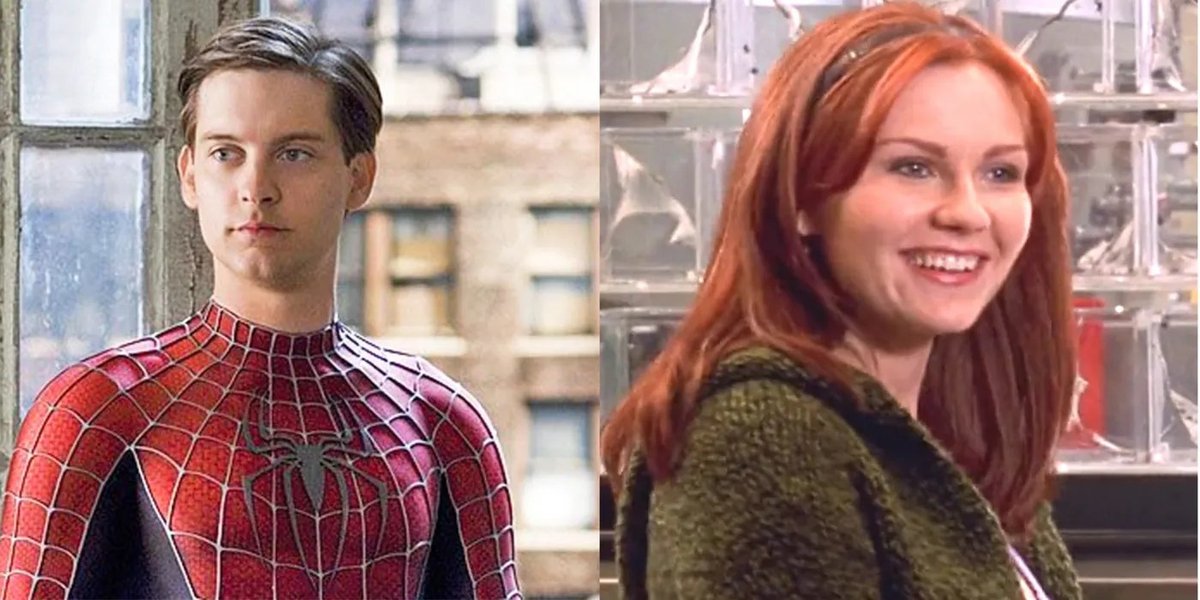
When we talk about the most impactful superhero films of all time, Sam Raimi's Spider-Man trilogy invariably enters the conversation. But beyond the web-slinging action and iconic villains, the films crafted a deeply human core, largely thanks to its central romantic dynamic. One character, in particular, made a significant leap from the vibrant panels of comic books to the silver screen, becoming a cornerstone of Peter Parker's world: Mary Jane Watson: From Comics to Screen (Raimi's Adaptation). This isn't just a story about a superhero's girlfriend; it's a nuanced portrayal of love, sacrifice, and growth that resonated with millions and shaped a generation's understanding of the character.
Before diving deep, here’s a quick overview of what made Kirsten Dunst's Mary Jane a memorable part of the Raimiverse:
At a Glance: Raimi's Mary Jane Watson
- Primary Love Interest: Peter Parker's next-door neighbor, childhood crush, and ultimate romantic partner.
- Portrayed By: Kirsten Dunst, who brought a unique blend of vulnerability and strength to the role.
- Key Qualities: Kind, sweet, empathetic, and resilient, especially in the face of an abusive home life.
- Character Arc (Spider-Man 1 & 2): Evolves from a girl seeking escape and validation to a woman who understands and embraces Peter Parker's dual life.
- Iconic Moments: The upside-down kiss in the rain, her growing understanding of Peter's secret.
- Connection to Comics: Largely faithful to her comic book counterpart in personality and background (e.g., abusive father).
- Impact: A human anchor for Spider-Man, providing emotional depth and raising the stakes for Peter's heroic journey.
The Web of Adaptation: Crafting Mary Jane for the Big Screen
Bringing an iconic comic book character like Mary Jane Watson to live-action is no small feat. For decades, MJ had been a vibrant, independent, and often tragic figure in Peter Parker's life, known for her "Face it, Tiger... you just hit the jackpot!" introduction. Sam Raimi's vision aimed to capture that essence while grounding her in a relatable, early 21st-century New York. This adaptation sought to explore not just her outward charm but also her inner world – her dreams, her struggles, and her profound connection to Peter.
The challenge was to make her more than just a damsel in distress or a love interest. She needed agency, vulnerability, and a believable journey of her own, intertwined with the fantastical elements of Spider-Man's world. Raimi's films, especially the first two, largely succeeded in presenting a Mary Jane who was both aspirational and deeply human.
Kirsten Dunst's Defining Turn: Bringing MJ to Life
A significant part of the success of Raimi's Mary Jane lies in the casting and performance of Kirsten Dunst. Known for her roles that often blended innocence with an underlying resilience, Dunst brought a particular charm and gravitas to the character that viewers quickly gravitated towards. She embodied the bright, vivacious exterior of Mary Jane, but crucially, she also conveyed the quiet turmoil beneath, giving the character a compelling depth.
Dunst’s portrayal made Mary Jane feel tangible. You could see her longing for a better life, her frustration with her circumstances, and her genuine affection for Peter, even when he seemed distant or preoccupied. Her chemistry with Tobey Maguire's Peter Parker was palpable, a crucial element for selling one of comics' most enduring romances. Throughout the Spiderman movies starring Kirsten Dunst, her performance served as a vital emotional core.
Capturing the Essence: Kindness, Sweetness, and Empathy
One of the defining aspects of Raimi's Mary Jane, particularly in the first two films, was her inherent kindness and sweetness. Despite her own difficult home life, marked by an abusive father (a detail faithfully carried over from the comics, adding significant layers of sympathy to her character), she remained a compassionate individual. This background made her pursuit of different relationships and dreams understandable – she was seeking an escape and a stable, loving environment she lacked at home.
Her empathy shone through in her interactions with Peter. She wasn't just his next-door neighbor; she was a friend who genuinely cared. When Peter was struggling, Mary Jane was quick to sympathize and show concern, highlighting the deep bond they shared even before their romance fully blossomed. This foundational friendship was key to making their eventual romantic connection feel earned and authentic.
MJ's Evolution Across Spider-Man (2002) and Spider-Man 2 (2004): A Deep Dive
Mary Jane's journey across the first two Spider-Man films showcases a remarkable arc of self-discovery, resilience, and unwavering love. Her story isn't static; it's a testament to how external pressures and internal desires can shape a person, especially when entangled with the life of a superhero.
The First Spark: Spider-Man (2002)
In the inaugural film, Mary Jane Watson is introduced as Peter Parker's lifelong crush. She's dating Flash Thompson, the school bully, but it's clear her heart isn't entirely in it. Her relationships, whether with Flash or later with Harry Osborn, often serve as a reflection of her desire for stability and a normal life, a stark contrast to the chaos she experiences at home. She's shown to be understanding towards her ex-boyfriends; she breaks up with Flash due to his rudeness, and her split with Harry isn't about cheating, but about his jealousy over her growing friendship with Peter. This highlights her integrity and loyalty, even when she's searching for her own happiness.
Moments of Resilience: Facing Adversity
MJ isn't merely a passive victim in need of rescue. While she often finds herself in perilous situations, she demonstrates moments of courage and self-preservation. When accosted by a group of perverts in an alley, she doesn't hesitate to fight back, hitting one with her bag and kicking another before Spider-Man intervenes. Later, during her third kidnapping by the Green Goblin, she overcomes her fear of heights to follow Spider-Man's advice, bravely climbing down to safety. These instances underscore her inner strength and unwillingness to simply give up.
The Iconic Kiss: A Moment of Connection
Perhaps the most famous scene involving Mary Jane in the first film is the upside-down kiss in the rain with Spider-Man. This moment wasn't just romantic; it was a deeply heartwarming exchange between two souls, symbolizing a connection that transcended Peter's secret identity. It was a moment of pure, unadulterated heroism and affection that left an indelible mark on audiences and, crucially, on MJ herself.
Understanding and Sacrifice: A Glimmer of Insight
At the film's conclusion, heartbroken and despondent after Peter gently rejects her (to protect her from the dangers of his life as Spider-Man), MJ begins to piece things together. The kiss she shared with Peter, when he was in his Spider-Man persona, resonated deeply. This realization allows her to understand the profound sacrifice Peter is making and to respect his decision, showing a profound capacity for love that honors his choice to let her go for her safety. This emotional maturity sets the stage for her character's development in the sequel.
Love, Sacrifice, and Revelation: Spider-Man 2 (2004)
In Spider-Man 2, Mary Jane has moved on, pursuing her acting career and even becoming engaged to John Jameson. Yet, her connection to Peter remains undeniable. She grapples with his consistent disappearances and his inability to commit, unaware of the immense burden he carries as Spider-Man.
Navigating Peter's Struggles: Her Own Path and His Double Life
MJ's story in the second film revolves around her understanding of Peter's divided life. She's trying to build her own identity and career, yearning for a partner who can be fully present. Her frustration with Peter's unreliability is genuine, rooted in her desire for a normal, stable relationship – something Peter, as Spider-Man, struggles to provide. This puts her in a difficult position, caught between her feelings for Peter and the perceived stability offered by her engagement to John.
Growth and Loyalty: A Steadfast Friend
Despite her personal struggles and Peter's distance, MJ remains a decent friend to him. Her concern for his well-being is evident, and she still harbors deep affection. Her capacity for understanding shines through as she begins to truly grasp the immense pressure Peter is under, even before knowing his secret.
Confronting Danger: A Continued Will to Fight
Again, Mary Jane is not one to idly wait for rescue. In Spider-Man 2, during her kidnapping by Doctor Octopus, she attempts to attack him from behind. While unsuccessful (Doc Ock had learned from Aunt May’s earlier attempt), it reinforces her character's brave spirit and her inclination to defend herself and others when possible. It's the thought that counts, demonstrating her active, rather than passive, nature in moments of crisis.
The Big Reveal and True Love: Embracing His World
The climax of Spider-Man 2 brings Mary Jane full circle. Peter’s secret is fully exposed to her, and instead of fear or rejection, she embraces it. She recognizes the sacrifice Peter has made, both for her and for the city, and she understands his struggle. It’s a powerful moment of acceptance where she realizes Peter is her true love, regardless of his superhero alter ego.
This realization propels her to Peter's apartment, where she expresses her unwavering love and decides to move in with him. She also offers a heartfelt apology for her "bad actions" or moments of frustration, acknowledging her part in their complex relationship, which shows immense maturity. The film culminates in one of the most fantastic and satisfying endings, with MJ sharing a passionate kiss with Peter before watching him swing off as Spider-Man, fully understanding and accepting her role in his extraordinary life.
Key Traits That Made Raimi's MJ "Rock"
Based on the strong foundation laid in Spider-Man 1 and Spider-Man 2, several qualities stand out as reasons why Mary Jane Watson resonated so deeply with audiences.
Kindness and Empathy
From her early interactions with Peter, MJ consistently displayed a sweet and caring nature. Her abusive home environment didn't harden her; instead, it seemed to foster a deep well of empathy, particularly for Peter, who himself was often an outsider. This kindness made her approachable and made her concern for Peter feel genuine.
Understanding and Loyalty
Even before knowing Peter's secret, Mary Jane showed a significant capacity for understanding. Her breakups with Flash and Harry were handled with a degree of grace and honesty. Crucially, her loyalty to Peter as a friend, and later as a love interest, was a consistent theme. In Spider-Man 2, her decision to embrace Peter's dual identity demonstrates an ultimate loyalty and understanding that transcends typical romantic expectations.
Resilience and Bravery
Mary Jane wasn't a shrinking violet. Her attempts to fight back against perverts or Doctor Octopus, and her courageous descent during the Green Goblin attack, all point to a character with significant inner fortitude. She faced her fears and actively participated in her own survival, refusing to be a mere bystander.
Faithfulness to Comic Counterpart (Mostly)
For the most part, Raimi's Mary Jane remained faithful to the spirit of her comic book origins. The abusive father, her career aspirations (acting), and her "girl next door" charm mixed with an independent spirit were all echoes of her print incarnation, providing a solid foundation for her character.
Compelling Chemistry with Peter
The on-screen chemistry between Kirsten Dunst and Tobey Maguire was undeniable. Their shared moments, from the rain-soaked kiss to their emotional confessions, were heartwarming and believable, making their love story a central, compelling narrative thread for the audience. The emotional stakes of Peter's sacrifices were deeply felt because his love for MJ was so convincingly portrayed.
Addressing the Nuances: Areas for Discussion
While the first two films painted a largely positive picture of Mary Jane, no character is without their points of discussion or contention.
The "Clingy Outfit" Detail
One minor observation from the first film's iconic rain kiss scene has been noted: the "clingy outfit" that some viewers found potentially "too inappropriate for a PG-13 film" due to its revealing nature. This is a small detail within a powerful scene, often overshadowed by the emotional impact of the moment itself, but it highlights how even costume choices can spark discussion.
The Spider-Man 3 Controversy and Redemption
It's important to acknowledge that Mary Jane's portrayal in Spider-Man 3 diverged significantly from the character developed in the first two films. Many viewers felt she was "slandered," becoming a "mean woman, unfaithful girlfriend, and an abusive friend." This perception led to criticism that her role was diminished, primarily serving to make Spider-Man look good, stripping away many of her charming and empathetic qualities.
However, the film did aim for a form of redemption for her character by its conclusion. During the final battle, she played a crucial role in helping Peter, and her genuine grief at Harry Osborn's death, along with her efforts to mend her relationship with Peter, signaled a return to her more compassionate core. This late-film course correction aimed to restore the qualities that made her beloved, bringing her arc within the trilogy to a more resolved, albeit complicated, conclusion for the Spiderman movies starring Kirsten Dunst.
Beyond the Frame: What Raimi's MJ Taught Us About Heroic Love
Raimi's adaptation of Mary Jane Watson serves as a powerful example of how a love interest can be integral to a superhero's narrative, not just as a prize, but as a driving force and a mirror. She wasn't just "the girl"; she was Peter Parker's human anchor, the embodiment of the normal life he yearned for and the reason he fought so hard to protect his city.
Her journey taught us that love in the face of heroism often requires immense sacrifice, understanding, and an acceptance of the extraordinary. Mary Jane’s evolution from wanting to be saved to understanding and embracing Peter’s secret identity is a testament to the strength found in unconditional love. She learned that Peter Parker is Spider-Man, and loving one means loving the other, with all the inherent dangers and complexities.
Frequently Asked Questions About Raimi's Mary Jane
Was Raimi's MJ faithful to the comics?
For the most part, yes, especially in the first two films. Key elements like her abusive father, her aspirations as an actress, and her foundational friendship with Peter Parker were all drawn from her comic book counterpart. Kirsten Dunst's portrayal captured her vibrant, yet often vulnerable, personality effectively.
Why did Peter reject MJ at the end of Spider-Man 1?
Peter rejected Mary Jane to protect her. As Spider-Man, he understood the immense danger his dual life posed to anyone he loved. He believed keeping her at a distance was the only way to ensure her safety, a classic trope of the superhero sacrificing personal happiness for the greater good and the protection of loved ones.
What was Mary Jane's role in Spider-Man 2?
In Spider-Man 2, Mary Jane's role was pivotal in exploring Peter Parker's internal conflict. She represented the normal life Peter craved but couldn't fully commit to. Her decision to pursue her own dreams and eventually confront Peter about his absences pushed his character development. Ultimately, her acceptance of his secret identity by the film's end became a catalyst for Peter to fully embrace both sides of himself.
The Lasting Echo: Why This Adaptation Still Matters
The journey of Mary Jane Watson from the pages of Marvel Comics to the screen in Sam Raimi's Spider-Man trilogy remains a significant touchstone for superhero cinema. It illustrates how faithful yet nuanced adaptation can create a character that feels both familiar and refreshingly real. Mary Jane, as portrayed by Kirsten Dunst in the first two films, wasn't just a love interest; she was a fully realized individual whose arc reflected themes of resilience, empathy, and the profound sacrifices inherent in loving a superhero.
Her story encourages us to look beyond the surface, to appreciate the internal battles characters face, and to recognize the strength found in vulnerability and understanding. The emotional depth she brought to the films elevated them beyond mere action spectacles, creating a lasting legacy that continues to resonate with fans today. As you revisit these films, pay close attention to Mary Jane's journey – you might just find new layers of appreciation for this iconic character and her pivotal role in Peter Parker's world.